How to Make Cannabis Sugar (Cannasugar)
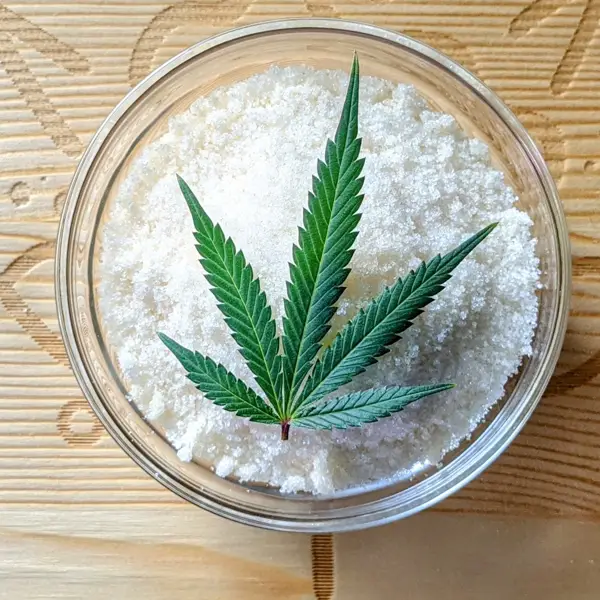
Cannabis sugar is one of the most versatile, precise, and beginner-friendly infusions you can make. It dissolves into anything, stores indefinitely, and doses predictably by the teaspoon. This guide covers every method, ratio, evaporation technique, sugar type, use case, troubleshooting scenario, and FAQ.
Cannabis-infused sugar occupies a unique place in the edibles kitchen. Unlike cannabutter or cannabis oil — which require fat as a carrier — sugar works because your tincture soaks into sugar crystals and stays there after the alcohol evaporates. What remains is sugar that carries active cannabinoids, measures consistently by the teaspoon, dissolves in anything from coffee to cocktails, and leaves almost none of the cannabis flavor that puts people off other infusions.
It's also one of the most beginner-accessible infusions on the site. If you've already made a tincture, you're one step away from a shelf-stable, versatile ingredient you'll reach for constantly.
Before you start: you'll need a batch of cannabis tincture. See our complete tincture guide for both Green Dragon and Golden Dragon methods.
What you'll need
| Tool | Why it matters | What I use |
|---|---|---|
| Glass baking dish | Holds the mixture during evaporation — glass doesn't react with alcohol | My baking dish |
| Silicone spatula | For thorough mixing without scratching | My spatula |
| Cheesecloth | Covers the dish to keep debris out while allowing evaporation | Cheesecloth |
| Kitchen scale | Weigh your sugar for consistent potency per serving | My kitchen scale |
| Airtight storage container | For storing finished sugar | Glass jar with lid |
| Heat mat (optional) | Gentle, safe low heat to speed evaporation | Seedling heat mat |
| Food dehydrator (optional) | Fastest evaporation method, precise temperature | My dehydrator |
Choosing your tincture: how it affects the finished sugar
Both tincture methods produce excellent cannabis sugar — the choice affects flavor and potency.
| Green Dragon | Golden Dragon (QWET) | |
|---|---|---|
| Flavor in finished sugar | Earthier, more cannabis-forward | Cleaner, more neutral — almost undetectable |
| Potency | Higher — longer soak extracts more cannabinoids | Slightly lower — minimal soak preserves taste over yield |
| Color of finished sugar | Slightly darker, more amber | Lighter, golden |
| Best for | Maximum potency, recipes where flavor is masked | Coffee, cocktails, applications where clean flavor matters |
Pro technique — the two-wash method: If you want the best of both worlds, run a quick cold wash first to produce Golden Dragon (clean, tasty), then run a longer second soak on the same plant material to produce a more potent Green Dragon batch. Use your Golden Dragon for sublingual use and your Green Dragon for cooking. Your sugar can be made from either or a blend of both.
Choosing your sugar
Most crystalline sugars work. What won't work: powdered sweeteners (Splenda, powdered sugar) and liquid sweeteners (honey, maple syrup). You need distinct crystals that can absorb tincture and re-dry.
| Sugar type | Notes |
|---|---|
| Granulated white sugar | Most reliable — consistent grain, neutral flavor, dries cleanly. Best starting point. |
| Raw / turbinado sugar | Larger crystals, slight molasses flavor, dries well — excellent for cocktail rimming |
| Brown sugar | Works, but higher moisture content means longer drying time. Rich flavor pairs well with baked goods. |
| Coconut sugar | Works well — earthy, caramel notes, slightly coarser grain. Naturally vegan. |
| Demerara sugar | Large golden crystals, excellent texture for rimming glasses or topping desserts |
| Powdered sweeteners | Won't work — no crystalline structure to hold the cannabinoids after alcohol evaporates |
Tincture to sugar ratio
The ratio of tincture to sugar directly affects potency and drying time. More tincture = more cannabinoids per teaspoon, but also longer drying time and more risk of clumping.
| Tincture | Sugar | Notes |
|---|---|---|
| ¼ cup | 1 cup | Lighter coating, faster drying, milder result |
| ½ cup | 1 cup | Standard — good balance of potency and workability (our recipe) |
| ¾ cup | 1 cup | Higher potency, significantly longer drying time, more clumping risk |
Start with the ½:1 ratio until you know your tincture's strength. Use our Potency Calculator to estimate THC per teaspoon of finished sugar.
How to make cannabis-infused sugar
The base process (all methods)
- Add your sugar to a glass baking dish and spread it into an even layer.
- Pour your tincture over the sugar slowly, stirring as you pour to ensure every crystal gets coated.
- The mixture should look like wet sand — glossy, evenly colored, no dry patches and no puddles.
- Cover the dish loosely with cheesecloth to keep out debris while allowing evaporation.
From here, choose your evaporation method:
Evaporation Method 1: Air drying (safest, most hands-off)
Time: 24–72 hours depending on humidity and ratio Best for: First timers, humid climates, overnight drying
Place the covered dish somewhere undisturbed at room temperature. Stir every 4–6 hours to break up forming clumps and expose fresh surface area to air. The sugar is ready when it looks and feels dry — no glossy patches, no alcohol smell, breaks apart like regular sugar when pressed.
In humid environments this can take the full 72 hours. In dry climates or winter-heated homes, often done in 24.
Evaporation Method 2: Heat mat (our recommended method)
Time: 12–24 hours Best for: Most people — safe, contained, faster than air drying
A seedling heat mat set under your baking dish provides gentle, consistent low heat — typically 70–85°F — that meaningfully speeds evaporation without any risk of overheating cannabinoids or creating flammable fume concentrations. It's our preferred method because it's safe, requires almost no monitoring, and fits under a standard baking dish.
Place your covered dish on the mat, stir every few hours, and check at the 12-hour mark. The same heat mat we link in the recipe card works perfectly — it's also useful for germinating seeds if you grow.
Evaporation Method 3: Food dehydrator (fastest)
Time: 4–8 hours Best for: People in a hurry with a dehydrator on hand
Set your food dehydrator to its lowest temperature — ideally 95°F (35°C). Spread your tincture-sugar mixture onto dehydrator trays lined with parchment or silicone mats. Run the dehydrator with the door slightly ajar to vent alcohol fumes, in a well-ventilated space. Stir every hour or two. At the lowest setting the heat is gentle enough not to degrade cannabinoids. Check for dryness at the 4-hour mark.
Important: Do not use a dehydrator with a heating element near the bottom if the tray sits directly above it — you want airflow drying, not direct heat.
Evaporation Method 4: Low oven (fastest, most attention required)
Time: 2–4 hours Best for: Experienced makers, gas-free electric ovens only
⚠️ Critical safety note: Alcohol is highly flammable. Never use the oven method with a gas oven — even a pilot light can ignite alcohol vapors. Electric ovens only, door propped open slightly to vent fumes, in a well-ventilated kitchen with the range hood running.
Set your electric oven to 200°F (93°C) or lower. Spread your mixture in the baking dish and place in the oven with the door propped open an inch. Stir every 30 minutes. The low heat drives off alcohol efficiently — but watch the sugar color. It should end up golden, not dark brown. Pull it when dry.
For most people, the heat mat or dehydrator is a better choice. The oven method is faster but requires more attention and carries higher risk if you're not careful about ventilation.
How to tell when it's done
Your cannabis sugar is fully ready when:
- It looks and feels completely dry — no wet or glossy patches
- The alcohol smell is gone — it should smell faintly of cannabis, not ethanol
- It presses apart under a spoon rather than sticking together in a wet clump
- The color is consistent throughout — no damp darker patches at the bottom
Check the bottom of the dish. Moisture settles there. If the bottom layer still feels tacky, it needs more time regardless of how the top looks.
Breaking up clumps
Some clumping during and after drying is normal — cannabinoid-coated sugar crystals stick together as they dry. Once fully dry, break up any clumps with a spoon, your fingers, or a quick pulse in a food processor or coffee grinder. The grinder method produces a finer texture that dissolves faster in drinks — useful if you're making cannabis simple syrup or using it in hot beverages.
How to use cannabis sugar
This is where it gets interesting. Once you have a batch, the applications are almost endless.
Beverages
- Stir into coffee, tea, or espresso — dissolves just like regular sugar
- Add to lemonade, iced tea, or fruit juice
- Use in cannabis-infused cocktails or mocktails
- Make a cannabis simple syrup (dissolve equal parts sugar and hot water, let cool)
Baking
- Substitute cup-for-cup in any recipe calling for granulated sugar
- Mix with cannabutter in the same recipe for layered potency
- Use as a finishing sugar on top of cookies, muffins, or donuts
Cocktail and garnish use
- Rim cocktail glasses with cannabis sugar for infused drinks
- Sprinkle over fruit, yogurt, or oatmeal
- Use as a finishing touch on dessert plates
Practical tip: Because cannabis sugar doses by the teaspoon, it's one of the best formats for microdosing. Once you know your estimated mg per teaspoon from the calculator, you can add precisely what you want to any beverage without measuring out liquid tincture drops.
Potency and dosing
Potency per teaspoon depends on the strength of your tincture and the tincture-to-sugar ratio you used. Run your numbers through our Potency Calculator — enter your original cannabis amount and THC%, then note the estimated concentration in your tincture. From there:
Rough estimate for a standard batch (½ cup tincture into 1 cup sugar):
- If your tincture is moderate strength (~10mg THC/ml), 1 cup of sugar contains roughly 800mg THC total
- 1 cup of sugar ≈ 48 teaspoons → approximately 16mg THC per teaspoon
- That's on the higher end. Start with ¼ teaspoon (about 4mg) until you know your batch's strength.
Always label your finished sugar with the estimated potency per teaspoon. Future you — and anyone else who might use it — will appreciate it.
Troubleshooting
My sugar won't dry / still feels wet after 48 hours Most common in humid environments. Move to a drier location, switch to a heat mat or dehydrator, and stir more frequently. If you used too much tincture (more than ¾ cup per cup of sugar) the drying time increases significantly.
My sugar is in one solid clump Normal — it just needs to be broken up after drying is complete. Use a spoon, your fingers, or pulse briefly in a food processor. If it's still wet underneath the crust, it needs more drying time before you break it up.
My sugar smells strongly of alcohol Not fully evaporated yet. Continue drying. Tasting any alcohol burn when you try a small amount is another sign it needs more time. Never use sugar that still tastes of alcohol.
My sugar turned very dark Could be the tincture type (Green Dragon produces darker sugar), the sugar variety (brown and coconut sugar are naturally darker), or slight overheating. Darker sugar still works — taste it. If it tastes burnt or acrid, the heat was too high. If it tastes fine, it's just color.
My sugar doesn't seem to be working Most likely cause: the original tincture was weak due to incomplete decarb or insufficient soak time. Check the tincture guide and ensure your cannabis was properly decarbed before soaking. Also confirm you're giving edibles the full 1–2 hour onset window before assessing.
Can I use this in recipes that call for powdered sugar? Not directly — cannasugar is granulated, not powdered. You can pulse it in a coffee grinder to get close to a powdered texture, but results vary by sugar type.
Storage
Cannabis sugar is shelf-stable — one of its major advantages over fat-based infusions that require refrigeration.
- Airtight container, cool dark place: 6–12 months
- Refrigerator: Up to 2 years
- Freezer: Indefinitely
Label with date, tincture type, and estimated potency per teaspoon. Keep well out of reach of children and pets — it looks exactly like regular sugar.
Frequently asked questions
What is cannabis-infused sugar?
Do I have to make tincture first?
How long does cannabis sugar take to dry?
Is the oven method safe?
Can I use any type of sugar?
How do I know my sugar is fully dry?
Does cannabis sugar dissolve in cold drinks?
How is cannabis sugar different from cannabis simple syrup?
Can I make cannabis sugar without alcohol tincture?
What's the shelf life of cannabis sugar?

Cannabis-Infused Sugar#
Ingredients
- 1 cup granulated sugar (use certified vegan sugar to make it vegan)
- 1/2 cup cannabis tincture
Equipment
- baking dish
- silicone spatula
- cheesecloth
- heat mat (optional, for drying)
Directions
- Add the sugar to a baking dish.
- Pour your tincture over the sugar.
- Use a silicone spatula to mix the sugar and tincture thoroughly, coating the sugar. The mixture will resemble wet sand.
- Cover the dish with a layer of cheesecloth to keep dust, cat hair, fairies, and other debris out of your sugar.
- Place the dish somewhere it won't be disturbed and allow the alcohol to evaporate completely. Stir frequently (5-6 times a day) to ensure complete evaporation. If you're looking to speed up evaporation, keep in mind that alcohol is EXTREMELY flammable. I use a heat mat for seedlings underneath my baking dish as a source of low heat to speed up evaporation.
- The sugar is ready when it again looks like dry sugar, and it no longer smells like alcohol.
- Store in an air-tight container in a cool, dark place.
Notes
For dosing help, try our edibles dosage calculator.
Storage: Store cannabis-infused sugar in an air-tight container in a cool, dark place.
Comments#
Loading comments…
Leave a comment